
Best SIM Card for Thailand: Your Complete Guide to Staying Connected
Staying connected during a Thailand trip shouldn’t be complicated. Between navigating Bangkok’s bustling streets, sharing photos from Phi Phi Islands, and keeping in touch with friends back home, reliable internet access is essential for modern travelers.
This guide breaks down everything tourists need to know about getting a sim card in Thailand, from airport options to the smartest connectivity solutions available today.

Why Getting the Right SIM Card Matters
Thailand’s tourism infrastructure is excellent, but connectivity shouldn’t be left to chance. A reliable SIM card ensures access to Google Maps when exploring remote areas, lets travelers book last-minute accommodations, and keeps communication lines open for emergencies.
The wrong choice can mean slow data speed, unexpected costs, or gaps in coverage outside major cities. Smart travelers research options before arrival rather than settling for whatever’s available at the airport.
Understanding Thailand’s Mobile Network Landscape
Thailand operates on three major network providers: AIS, TrueMove, and dtac. These networks deliver solid coverage across Bangkok, Chiang Mai, Phuket, and most tourist destinations. Coverage in remote areas varies, though major tourist spots maintain strong signals.
Many travelers assume purchasing a local SIM card at the airport is the only option. While Thailand’s airports stock tourist SIM packages from various providers, these aren’t always the most cost-effective or convenient choice for international visitors.
TravelSim: The Smarter Alternative for Tourists
TravelSim stands out as the best SIM card solution for Thailand because it combines convenience with reliable coverage and competitive pricing. Instead of dealing with language barriers or hunting for convenience stores, travelers activate their connection before leaving home.
The service automatically connects to the strongest available network among Thailand’s major providers. This means consistent data speed whether exploring Bangkok’s temples, relaxing on Koh Samui beaches, or trekking through northern mountain regions.
Setup takes just minutes. Travelers can purchase their plan online, and it automatically activates upon arrival or they can activate it manually on the website with a single click before departure, depending on the product they choose. No passport registration, no airport queues, no stress about finding the right store.
TravelSim’s plans offer various data options, including packages tailored for heavy users, as well as flexible packages for lighter browsing needs. The pricing remains transparent with no hidden activation fees or surprise charges.
Airport SIM Cards: What Tourists Should Know
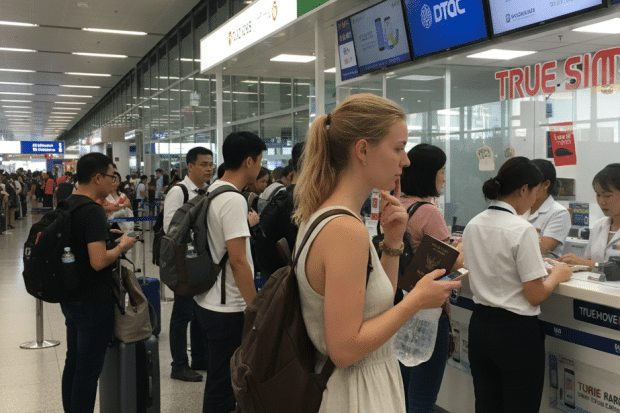
Thailand’s airports offer SIM card kiosks from AIS, TrueMove, and dtac. These tourist SIM packages typically include data allowances ranging from 10GB to unlimited data, with validity periods of 7 to 30 days.
Prices at Suvarnabhumi Airport in Bangkok generally range from 300 to 800 baht (roughly $9 to $24) depending on the data package and validity period. Smaller airports may have limited options or higher prices.
The main drawbacks include waiting times during peak arrival hours, potential language barriers, and the need to present a passport for registration. Some tourists report confusion about which package suits their needs when faced with multiple options at once.
Convenience Store Options
7-Eleven stores throughout Thailand sell prepaid SIM cards from major network providers. Prices are competitive, often cheaper than airport rates, and stores are found in many places across the country.
The activation process requires presenting a passport and completing registration forms. Staff assistance varies by location, and English proficiency differs between tourist areas and local neighborhoods. This option works for travelers comfortable navigating potential communication challenges.
Cost Comparison: What to Expect
Local SIM card prices vary by provider and package:
Budget packages start around 200-300 baht ($6-9) for basic data allowances of 5-10GB. Mid-range options cost 400-600 baht ($12-18) for 20-30GB with longer validity periods. Premium unlimited data packages reach 700-1000 baht ($21-30) monthly.
TravelSim’s pricing falls within similar ranges but eliminates airport hassles and provides multi-network access. The cost difference between local options and TravelSim becomes negligible when factoring in convenience and setup time saved.
International roaming from home carriers remains the most expensive option, often costing $10-15 per day or more. Even a week-long trip can exceed $100 in roaming charges, making dedicated Thailand solutions far more economical.
Setting Up Your Thailand Connection
Travelers using TravelSim complete setup before departure. Purchase a plan online, download necessary apps if needed, and activate it online with just one click upon landing in Thailand. The mobile phone connects automatically to the strongest available network.
For those choosing local SIM cards, the activation process involves visiting an airport kiosk or convenience store, presenting a passport, selecting a package, and waiting for staff to complete registration. The SIM card gets inserted into the mobile phone, and the connection activates within minutes in most cases.
Network settings occasionally require manual adjustment. Switching between available providers happens through phone settings if the initial connection seems slow.
What About Other Asian Countries?
Travelers visiting multiple destinations appreciate solutions that work across borders. TravelSim offers packages covering other Asian countries including Vietnam, Cambodia, Singapore, and more. This eliminates the need to purchase separate SIM cards at each stop.
Local Thai SIM cards typically don’t provide the best value for multi-country trips. International roaming charges apply when crossing borders, and coverage quality varies significantly.
Making the Right Choice for Your Thailand Trip
Thailand offers multiple connectivity options, from airport kiosks to convenience stores to modern alternatives. The best SIM card for Thailand depends on individual travel styles and priorities.
Budget-conscious travelers willing to navigate language barriers and registration processes may find adequate local options. Those prioritizing convenience, reliable coverage, and hassle-free setup benefit most from TravelSim’s approach.
Skip the airport lines and convenience store confusion. TravelSim delivers reliable internet access from the moment you land, letting you focus on enjoying Thailand rather than worrying about staying connected. With coverage across major cities and remote areas alike, it remains the smartest choice for tourists who want connectivity that simply works.
Frequently Asked Questions About Thailand SIM Cards
What is the best SIM card for tourists in Thailand?
TravelSim ranks as the best choice for most tourists visiting Thailand. It provides reliable coverage across the country by automatically connecting to multiple network providers, offers transparent pricing with no hidden fees, and activates instantly upon arrival without airport delays or language barriers. The service works particularly well for travelers who value convenience and want to avoid the hassle of finding local stores or dealing with registration requirements.
How much is a Thailand SIM card at the airport?
Thailand SIM card prices at airports typically range from 300 to 800 baht ($9 to $24). Basic tourist packages with 10-15GB of data and 7-day validity cost around 300-400 baht. Mid-range options with 20-30GB and 15-day validity run 500-600 baht. Unlimited data packages for 30 days reach 700-800 baht or more. Prices vary slightly between Suvarnabhumi, Don Mueang, and other airports, with smaller airports sometimes charging premium rates due to limited competition.
Can foreigners buy SIM cards in Thailand?
Yes, foreigners can purchase SIM cards throughout Thailand. Airport kiosks, convenience stores like 7-Eleven, and official provider shops all sell prepaid packages to international visitors. Registration requires presenting a passport, which staff use to complete necessary documentation. The process takes 5-15 minutes, depending on location and customer volume. Tourist-focused areas generally have English-speaking staff, while local neighborhoods may present language challenges during the purchase and activation process.
Is it better to get an eSIM or a physical SIM for Thailand?
Both options work well in Thailand, depending on traveler preferences and mobile phone compatibility. The key factors include convenience of setup, coverage quality, and personal comfort with technology. Modern travelers increasingly choose digital solutions that activate remotely and connect to multiple networks automatically. Traditional physical cards remain widely available and familiar to those who prefer tangible products. The best choice depends on individual priorities around ease of use, coverage needs, and willingness to handle registration procedures.
Making the Right Choice for Your Thailand Trip
Thailand offers multiple connectivity options, from airport kiosks to convenience stores to modern alternatives. The best SIM card for Thailand depends on individual travel styles and priorities.
Budget-conscious travelers willing to navigate language barriers and registration processes may find adequate local options. Those prioritizing convenience, reliable coverage, and hassle-free setup benefit most from TravelSim’s approach.
Skip the airport lines and convenience store confusion. TravelSim delivers reliable internet access from the moment you land, letting you focus on enjoying Thailand rather than worrying about staying connected. With coverage across major cities and remote areas alike, it remains the smartest choice for tourists who want connectivity that simply works.